
Power and Manual Tools for the DIY Enthusiast: Building Your Arsenal (and Maybe Some Tools)
DIY Tools
Here’s the rub—how do you know which tools are essential and which ones will just collect dust in the shed? Fear not, for I am here to guide you through the wild world of tools, both power and manual, with a dash of humour to keep things lively. We’ll also take a dive into DIY-ing your own tools because what’s more DIY than making the very tools you’ll use for DIY? It’s a DIY-ception!
Welcome to the realm of the DIY enthusiast, where no screw is too tight, no wood plank too warped, and no job too small or too big (well, let’s not get carried away). Whether you’re into woodworking, plumbing, or that mysterious genre called “fixing things around the house,” there’s one thing we all need: tools.
I make no apologies for my power tools. Very well used and yes, they are very often in need of cleaning but I took the pictures at a time when I had just finished working on a job. I was tired and left the cleaning until the next day.
The Power of Power Tools
Let’s be real—there’s something deeply satisfying about holding a power tool. The hum, the buzz, the sheer force in your hands—this is what separates the serious DIYers from the “maybe I’ll fix it tomorrow” types. Here are the absolute essentials that every enthusiast should have in their collection:
1. Drill/Driver
This is the Swiss Army knife of the power tool world. A cordless drill/driver is an absolute must for woodworking, metalwork, and everything in between. It drills holes, drives screws, and can even be used to mix paint if you’re feeling adventurous. You’ll want one with variable speeds and torque settings because, like a good relationship, it’s all about control.
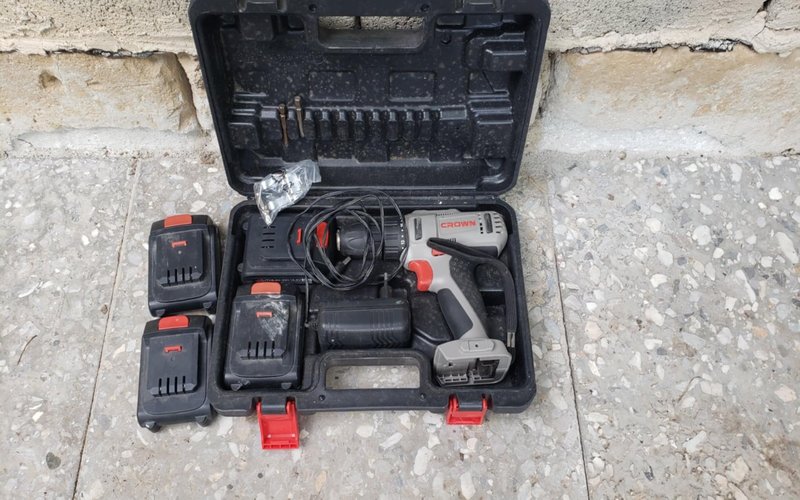
I have four drills which I use regularly. My goto drill is a battery drill by Crown, which certainly has enough power for most jobs. The same drill is available from several suppliers with their own logo. My only complaint with it is that the battery is bulky, however for the power it gives me, there is no option as power needs a good battery and a smaller battery would result in more down time or constant battery changes.
There is a built-in led light which comes on when the trigger is squeezed and shines on the end of the drill to illuminate the work being done.
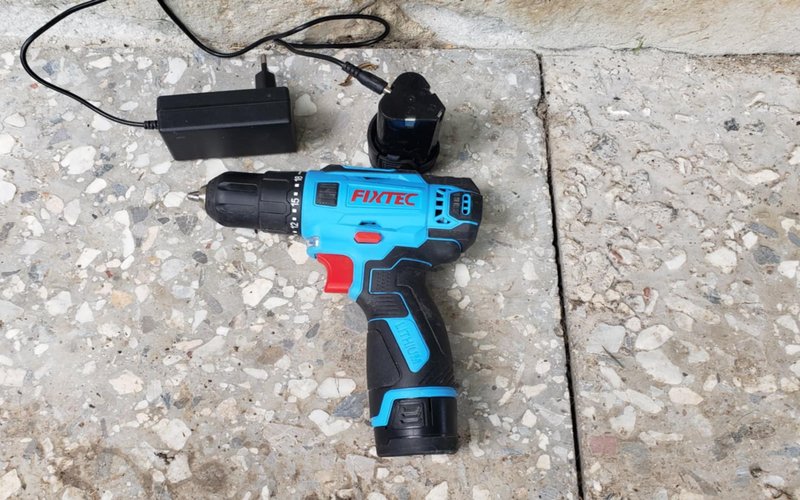
I also have a second battery drill with a smaller battery which I use mostly as a screwdriver. It’s quite acceptable as a drill for light work and has two variable speeds switched on the top. Its also good as a screwdriver but not to be used for heavy duty screwing as the ratchet clutch became dislodged and had to be fixed.
This little drill also has a built-in led light as the larger one. Both drills can be locked by pressing the red forward/reverse button above the trigger, half way to it’s mid position which is a useful feature.
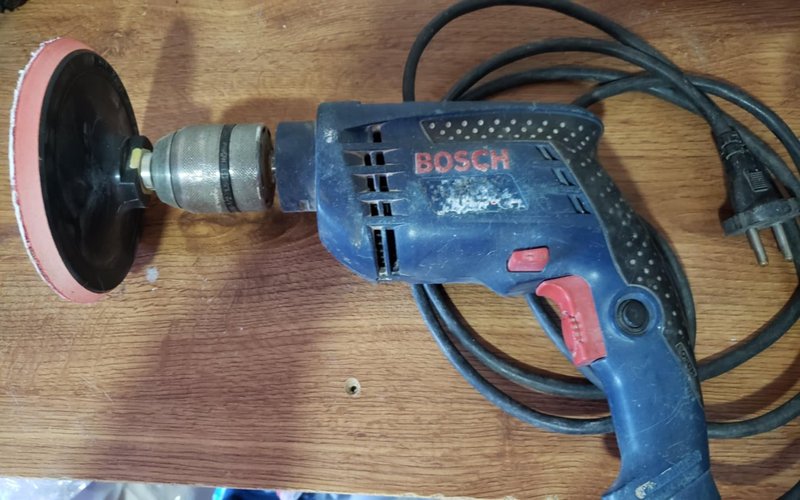
I have a more standard mains electric drill which I use mainly for drilling into concrete or brick for putting wall plugs into as neither of the battery drills incorporate a hammer feature. As you can see quite plainly, it has a history. All of my tools are in regular use. Some websites write about DIY but the writers have never held a screwdriver in their lives and know nothing of the subject. Shame on them.
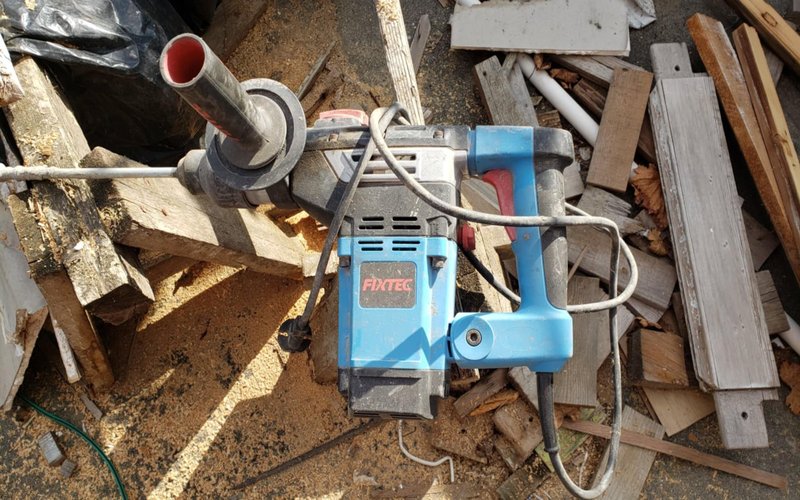
Finally, for bone-crushing power, I have a monster which I use mainly for mixing cement in a bucket and when needed, chiselling concrete or blocks/bricks.
This machine is heavy. It has a big motor, forward and reverse selection and a second know which gives drill, chisel or a combination of both for stubborn concrete jobs. The bits an other accessories such as the cement mixer, lock into the chuck by pulling the sleeve on the chuck backwards to insert or release the tools.
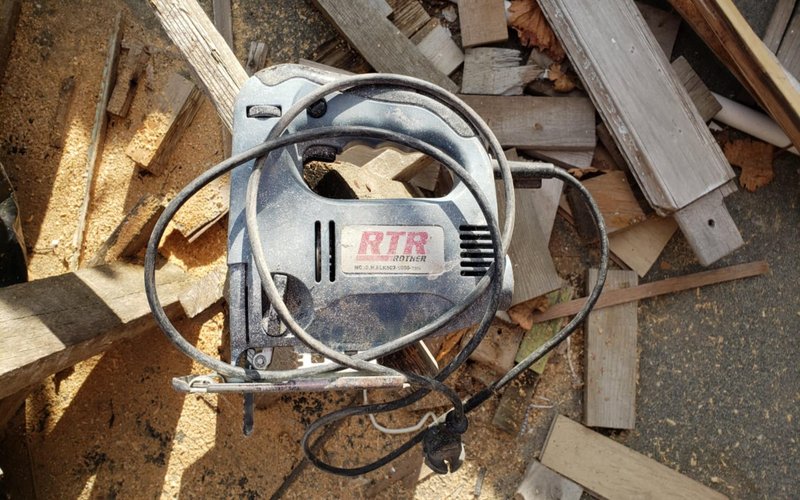
2. Jigsaw
The jigsaw is your go-to for making curved cuts in wood, plastic, or metal. Think of it as the scalpel of your power tool kit, except with a lot more power and noise. Whether you’re cutting out intricate shapes for your next DIY bookshelf or just trying to get through a stubborn piece of plywood, the jigsaw is a lifesaver. I find that a common problem with jigsaws, is that the blades tend to bend to one side after some use which makes the cut angled if you cut anything more than about 1/4 inch thick material.
3. Circular Saw
For those straight, long cuts in wood, a circular saw is the answer. It’s the muscle of the power tool family, slicing through timber like butter. It’s perfect for cutting down large pieces of wood to size when you’re building something like a table or framing a new project. Just be sure to wear your safety goggles and stand firm. The last thing you want is a piece of wood with an attitude problem.
Replacement blades are relatively cheap at just a few dollars.
The blade can be adjusted for angle and depth of cut and a safety guard is always in place over the blade with the bottom guard moving automatically or manually to meet the wood.
A bag is provided to collect the dust from the machine and is the circular hole shown in the photo at the nearside rear of the silver coloured guard. I don’t use mine. Don’t even know where it is to be honest.
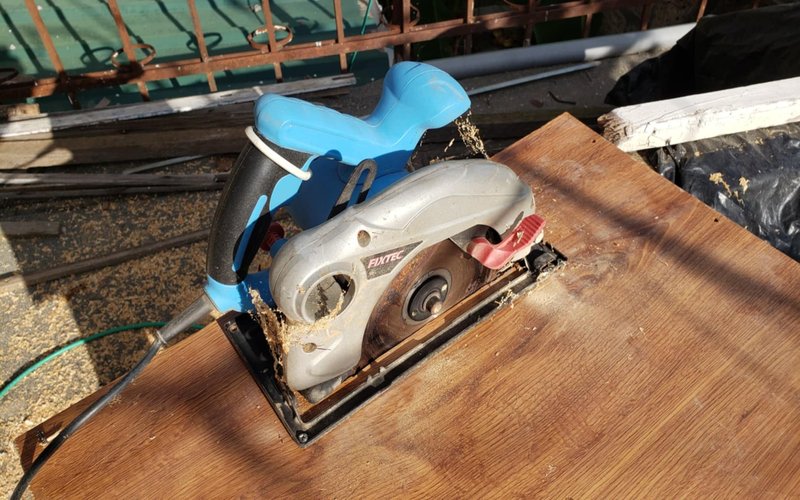
I don’t use my circular saw that much actually. Admittedly, it’s useful for taking to the work when the project is large, but I much prefer a table saw with cutoff facility. A cutoff facility means that the blade can be raised and brought down onto the work. This is often known as a mitre saw. I find I need both table and cutoff equally and during a period with no table saw, I was at a great loss for that facility, even going to the extent of mounting my circular saw upside down under a bench to give me the table facility. No, I can’t do without it.
4. Power Sander
Ah, the electric sander. If you’ve ever tried hand-sanding a piece of wood for hours on end, you’ll know why this tool is a godsend. A power sander smooths out surfaces in minutes, and it’s great for removing old paint, smoothing rough wood, or preparing a surface for varnishing. Palm sanders are great for smaller projects, while orbital sanders are ideal for larger, flat surfaces.
I also own a belt sander but as useful as it is, the difficulty is in getting appropriate belts as there is no standardisation and suppliers always seem to stock the length and width you don’t want.
On the other hand orbital sanders use ordinary sandpaper sheets which can easily be cut to size and are held by a bar at each end of the sanding face.

I have two kinds of sander, The kind known as an orbital sander and a belt sander. The belt sander doesn’t get as clogged up as the orbital sander does but it’s not always convenient to have spare belts on hand in case one wears out or breaks.
Occasionally I use an angle grinder with an appropriate sanding disc for heavy work and if I have an old piece of gnarled wood which I want to preserve the look of, I find that a wire mop in the angle grinder certainly wakes up the grain without removing too much material.
5. Router
And the router. No serious woodworker can do without the magic woodworking router.This is a handheld or table-mounted power tool used to hollow out (or “rout”) an area in wood. It’s most commonly used to create decorative edges, joinery, grooves, and patterns. Think of it as the fine sculptor of your DIY projects. It allows you to add intricate details, smooth edges, and make your work look more polished than the guy next door with just a hammer and a prayer.

For the uninitiated, a router is a tool that hollows out an area in wood. It’s used to create decorative edges, grooves, and even joinery. The router is like that one friend who’s quietly amazing at everything—you don’t realize how much you need it until you see it in action. Once you’ve routed a few fancy edges, you’ll never look at plain wood the same way again.
Have you noticed the beautiful shaped edges and grooves on furniture? That’s all done with a router. You can get lots of different cutters to fit into the router and they give you those wonderful edges.
So much more can be done which I will discuss in a post, but even such things as cutting a groove for glass to sit in is an absolute piece of cake with a router and the right router bit.
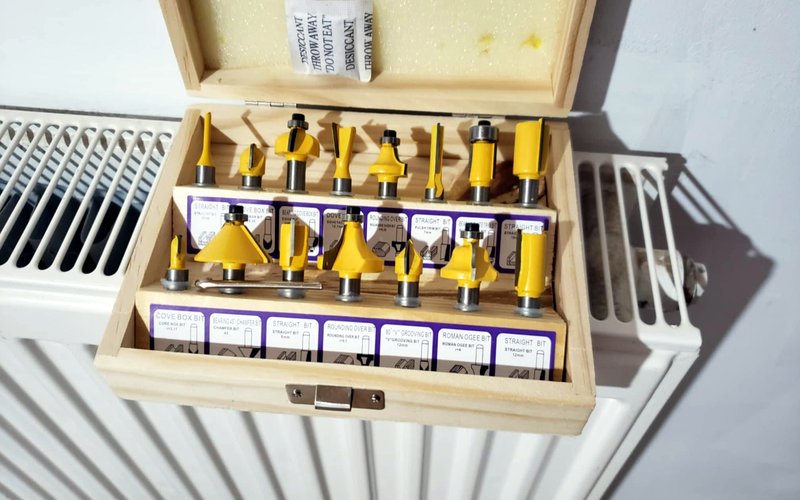
I have had a router for years ans would not be without it. It really makes a piece of wood look professional.
I love using a router and I have a post especially covering the router itself.
Electric Planer
An electric planer is a very useful tool for levelling out pieces of wood you’ve cut for a job. The one I have here has replaceable blades which are reasonably cheap but take care to set them correctly or you may find that you take more wood off one side than the other. Also it’s wise to set them to take off very little rather than too much and spoil the job. The depth of cut is dialled in by turning the knob at the front and is marked in fractions of a millimeter.
The red tube on the side is for attaching a vacuum cleaner or such to extract the shavings.
Always be careful to keep your hands away from the cutting surfaces. The red push button has to be held when operating the planer so is a quick release (known frighteningly as a dead man’s button).

Even with all the power tools in the world, sometimes you just need a good ol’ fashioned hand tool. Manual tools are quieter, often more precise, and give you that hands-on, visceral satisfaction that you just can’t get with something that plugs into the wall
Essential Manual Tools
1. Hand Saw
It may not be as quick as its power cousins, but the hand saw is a trusty sidekick for any DIYer. Whether you’re trimming a few pieces of wood or tackling smaller projects, the hand saw offers control and precision. Plus, it’s a great arm workout. No gym required! Just to say “a handsaw” is not a good description at all as handsaws come in many varieties. We have crosscut saws for cutting across the grain, rip saws with more course teeth than the crosscut, for cutting down the length of the grain.
There is the tenon saw for finer cutting of tenon joints, keyhole saws for expanding holes, coping saws for cutting designs and more the more delicate fret saw for cutting very fine design work.
I found a wide version of the hacksaw blade (used for cutting metal) which I use often as a fine saw for small jobs. I wrap a piece of cardboard around it near one end and tape on top of the cardboard. I find my self reaching for this little saw on many occasions.
This by no means covers the full gamut of saws available but is fairly representative of those used by DIYers.
2. Claw Hammer
If you don’t have a hammer, are you even a DIY enthusiast? The claw hammer is the tool for driving nails into wood, pulling them out when you mess up, and occasionally helping you release frustration (on the wood, not the family heirloom). Choose one that feels comfortable in your hand, and make sure the claw is sturdy for those inevitable “oops” moments. In fact I have several of different sizes. Hammers usually come by the weight of the head and the kind of head. A ball pein hammer is surprising ly, the one with the round ball opposite a normal looking but usually elongated head
3. Chisels
When it comes to woodworking, chisels are indispensable. They allow you to shape and carve wood with precision. You’ll want a set of bevel-edged chisels in various sizes to handle different jobs. Just remember to keep them sharp—dull chisels are no one’s friend. In fact, they’re more dangerous than sharp ones because they require more force. It’s also very useful to have a range of carving chisels to hand.
4. Tape Measure
This tool is the unsung hero of any project. You’ll need it for measuring wood, marking cuts, and avoiding those “cut once, curse twice” situations. Look for one that’s at least 25 feet long, with a locking mechanism and a solid clip so you can keep it handy on your belt (and look like you know what you’re doing). Don’t strop at that. My 25 ft tape measure is accompanied by a one metre stainless steel semi rigid rule and a 12 inch stainless steel rule.
5. Level
You’ve built a lovely shelf, but it’s slightly leaning to one side. This is what we call a DIY tragedy. A level ensures everything you build is, well, level. A 24-inch level will suit most needs, but it’s worth having a smaller one for more delicate jobs. I have a one metre long level and a four inch one for small and quick checks. Keep it straight, folks. No one likes a wonky table.
DIY Tools: Because Why Not?
You’re a DIY enthusiast—of course, you want to make your own tools! There’s something undeniably cool about creating a tool you’ll actually use for future projects. Here are a few ideas for DIY tools you can craft in your home workshop:
1. Wooden Mallet
A wooden mallet is a simple but handy tool to have. It’s used for tasks where a regular hammer would be too harsh, such as chiseling or assembling joints. Wooden joints can easily be marked and difficult to disguise later, by hitting with a steel headed hammer. NEVER hit a chisel with an ordinary hammer as eventually the end of the chisel will suffer from the constant bashing with a lump of steel attached to a handle – use the mallet like a professional.
You can make one out of hardwood scraps, shaping the head and handle to your desired size. It’s like the Thor’s hammer of woodworking—only you can wield it (and your fellow DIYers, maybe). I made my own from scrap pieces of oak.
2. Marking Gauge
A marking gauge is a tool used to mark out lines parallel to a straight edge, often used in woodworking for precision cuts and measurements. You can easily make one with a piece of scrap wood, a screw, and a sharp blade or nail for the marking point. Customize it to your needs, and you’ll wonder how you ever worked without one.
3. Bench Hook
This little gem is a must-have for woodworking. A bench hook holds your wood steady while you saw or chisel it, making your work faster and more accurate. It’s super simple to build—just three pieces of wood. One piece about 10 inches by 6 inches and one inch thick. A strip of wood is screwed at one end across the width at one end and a similar strip screwed across the other end in a similar fashion, except that it is on the opposite side. One end to hook over your workbench and the other to rest your workpiece against.
4. Homemade Sanding Blocks
Sure, you could buy sanding blocks, but where’s the fun in that? Cut scrap wood to size, wrap some sandpaper around it, and voilà—instant sanding block! These are great for hand-sanding smaller or hard-to-reach areas, and you can make different sizes depending on your needs.
Another sanding block which I find the most useful of all, is to cut a piece of white polystyrene foam and wrap the sandpaper around this. As it is more flexible, it wraps itself around the contours of the work and is also much more comfortable to hold.
A further departure from this, is to buy the foam blocks which are available completely covered on four sides with various grades of grit. These have the added benefit of not having sandpaper sliding off the block frequently.
Tool Storage: Keep It Together
Now that you’ve got your arsenal, where are you going to put all these bad boys? A tool chest or pegboard in your workshop is essential for keeping things organized. There’s nothing worse than wasting half your day looking for the drill bit that fell behind the toolbox last week.
Consider building your own DIY tool rack or wall-mounted tool organizer. It’s a great way to use up some scrap wood and customize your space to your needs. Plus, every time you hang up a tool, you’ll get a little hit of satisfaction from being both organized and creative.
Hold a tool up to the board, Decide on the means of hanging it there which you are going to use, mount the hangers and then put up the tool. Next draw around it with a felt-tipped pen and paint in the shadow of the tool. That way, the tool will always be in the same place and if it isn’t, the shadow will tell you immediately, which one is missing.
I find that the real benefit of a tool board is that it makes it easy to lay hands on any tool quickly and at the end of the day, shows you immediately which ones are still lying around somewhere.
Tools Are Your Best Friends (and Your Worst Enemies)
Whether you’re sawing through a two-by-four or chiseling out a fancy joint, having the right tools makes all the difference. Power tools give you speed and efficiency, while manual tools allow for precision and that personal touch. And hey, if you can DIY some of your own tools along the way, even better!
Remember, the best tools are the ones you actually use, so invest wisely and don’t be afraid to splurge on quality where it counts. After all, nothing screams “DIY enthusiast” like a garage filled with gleaming tools (and maybe a couple of half-finished projects).
So go forth, build, fix, create—and most importantly, have fun with it.