
Tackling Twists, Drops, and Latching Woes.
Let’s take a look at how to fix a door that won’t close properly. You try to nudge it shut with a gentle push, then a firmer one, and finally, you’re giving it the ol’ shoulder tackle. Fear not; today, we’ll solve this daily annoyance by guiding you through the reasons your door might be misbehaving and showing you how to fix it. By the end, you’ll have a door that closes smoother than a spy in an action movie.
Table of Contents
Common Causes of Door Trouble
A door that doesn’t close properly can be due to a few common issues. Here’s a quick rundown of what we’ll tackle today:
- Twisted Door: If the door appears warped or twisted.
- Dropped Door: A door that’s sagging or scraping the floor.
- Not Latching: When the door won’t catch in the frame or won’t stay shut.
Tools You’ll Need To Fix A Door Problem
You won’t need a pro-level toolkit to fix most door issues. Here’s a list of essentials:
- Screwdriver (preferably both Phillips and flathead)
- Wood screws
- Hammer
- Sandpaper
- Wood filler
- Plane or chisel
- A spirit level (optional but helpful)
And so how to fix a door that won’t close
How to Fix a Door That’s Twisted
A twisted or warped door is often a result of humidity or ageing wood. Let’s break down the fix.
Step 1: Diagnose the Twist
Start by closing the door and examining where it doesn’t align with the frame. Is there a gap at the top but tightness at the bottom? Or perhaps one side closes while the other side sticks out? This will give you a sense of the warp’s direction.
Step 2: Adjust the Hinges

Sometimes, adjusting the hinges can reduce a slight twist. Try loosening one hinge and tightening another to see if you can coax the door into better alignment. It won’t solve a severe twist but might help in minor cases.
Step 3: Sand or Plane the Edges
If the twist is more severe, sand down the edges that are sticking out of the frame when the door is closed. If you have a wood plane, even better! Take your time and work gradually so that you don’t accidentally overdo it.
Step 4: Add a Twist Tie (Optional)
For particularly stubborn twists, attach a twist tie or clamp to the door and leave it for a few days. Sometimes, adding a bit of pressure can gently reshape the door over time.
How to Fix a Door That’s Dropped
A door that’s “dropped” often scrapes the floor or frame when you try to close it. This is usually due to hinge issues or the door shifting out of place. Here’s how to lift it back up:
Step 1: Tighten the Hinges
Dropping often results from loose hinges. Take your trusty screwdriver and tighten all the hinge screws. Pay extra attention to the screws attached to the frame. If in doubt, replace the hinges. They’re not expensive.
Step 2: Replace the Hinge Screws with Longer Ones
If the door keeps dropping, swap out the existing hinge screws for longer wood screws. This adds extra support, helping keep the door in its place.
Step 3: Shim the Hinges
For stubborn cases, shimming the hinges may be necessary. Place a thin piece of cardboard or shim behind the lower hinge to nudge the door upward. You may need to experiment with the thickness of the shim to get it just right.
Step 4: Check the Door Frame
If your door is still drooping, the frame might be the culprit. Measure both sides to ensure the frame is square. If it’s out of alignment, you may need to make more extensive adjustments to the frame.
How to Fix a Door That Won’t Latch
Sometimes, your door closes perfectly but won’t latch. This could mean the latch and strike plate are misaligned, or the latch isn’t extending properly.
Step 1: Check the Alignment of the Latch and Strike Plate
Close the door slowly, and watch the latch as it meets the strike plate. If the latch isn’t lining up with the hole in the strike plate, mark where it should be.
Step 2: Adjust the Strike Plate
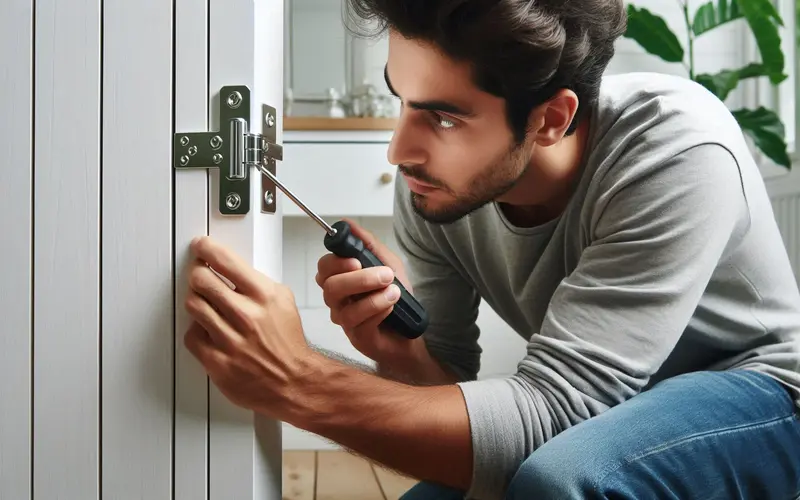
Loosen the screws on the strike plate, move it slightly up or down as needed, then tighten it back down. If it only needs a tiny adjustment, this could be all it takes to get the latch working.
Step 3: Enlarge the Hole in the Strike Plate
If the latch only partially engages, try widening the hole in the strike plate with a metal file. This gives the latch more space to “catch” and ensures a secure close.
Step 4: Consider a Latch Extension
If the latch won’t extend far enough, it may be worn out. You can replace it with a new latch mechanism, or look for a latch extender.
Additional Tips. How to Fix a Door That Won’t Close Properly
Sometimes, you need a bit of extra finesse to get your door behaving again. Here are a few more tips for tackling stubborn doors:
- Use Wood Filler for Worn-Out Holes: If hinge screws aren’t holding, fill the hole with wood filler, let it dry, then reinsert the screws for a tighter fit.
- Sand Down Swollen Spots: In humid areas, wooden doors can swell, which often causes sticking. Lightly sand the swollen area to give the door some breathing room.
- Check the Weatherstripping: In some cases, weatherstripping around the doorframe may have become dislodged or worn, preventing proper closure. Replace any damaged strips for a snug fit.
- Mind the Temperature: Wood can expand and contract with temperature changes. If your door sticks only in certain seasons, consider sanding just enough to prevent seasonal issues.
When to Call a Pro
Let’s face it: some doors are just plain stubborn, and no amount of DIYing will get them to close properly. If you’ve tried everything to fix a door that still won’t behave, it may be time to call in a professional. Issues like severe frame misalignment or structural shifts in your home might be too much for a simple DIY fix.
Wrapping It Up
There you have it—a complete guide to fix a door that doesn’t close properly. Whether it’s twisted, dropped, or refusing to latch, you’re now equipped to tackle the problem head-on. Not only will you save money by fixing it yourself, but you’ll also earn some bragging rights along the way.
And hey, next time someone asks why you’re so handy with doors, you can casually mention you read an article that made the process as easy as, well, closing a door!