
Bright Ideas and Brilliant LED COB Tips
If your kitchen lighting design feels like it was lit by a single bulb somewhere in 1975, it might be time for a lighting upgrade. Designing the right layout for kitchen lighting can transform the space, making it more inviting, functional, and even more stylish. Let’s dive into some bright ideas for kitchen lighting design, with a special focus on LED COB lighting. Don’t worry—we’ll keep it light, literally and figuratively!
Table of Contents
Why Kitchen Lighting Design Matters
Kitchen lighting isn’t just about aesthetics. Sure, it makes your kitchen look fantastic, but it’s also about practicality. Good lighting design keeps the space safe, helps with precision tasks like chopping, and even prevents culinary mishaps by letting you see what you’re doing.
A well-thought-out lighting layout often combines several types of lighting, layered to maximize both function and style. Think of it as the lighting “recipe” that makes your kitchen as pleasant to work in as it is to look at.
Different Types of Kitchen Lighting Designs
For a truly functional kitchen, there are three main types of lighting to consider:
- Ambient Lighting: General, room-wide illumination. This is your main source of light, usually from ceiling fixtures.
- Task Lighting: Focused light that helps you with specific tasks—like food prep. Task lighting makes all the difference in a safe and functional kitchen.
- Accent Lighting: The cherry on top. Accent lights add character, highlighting design features like cabinets or wall art.
Enter LED COB Lighting: The Kitchen’s Bright New Best Friend
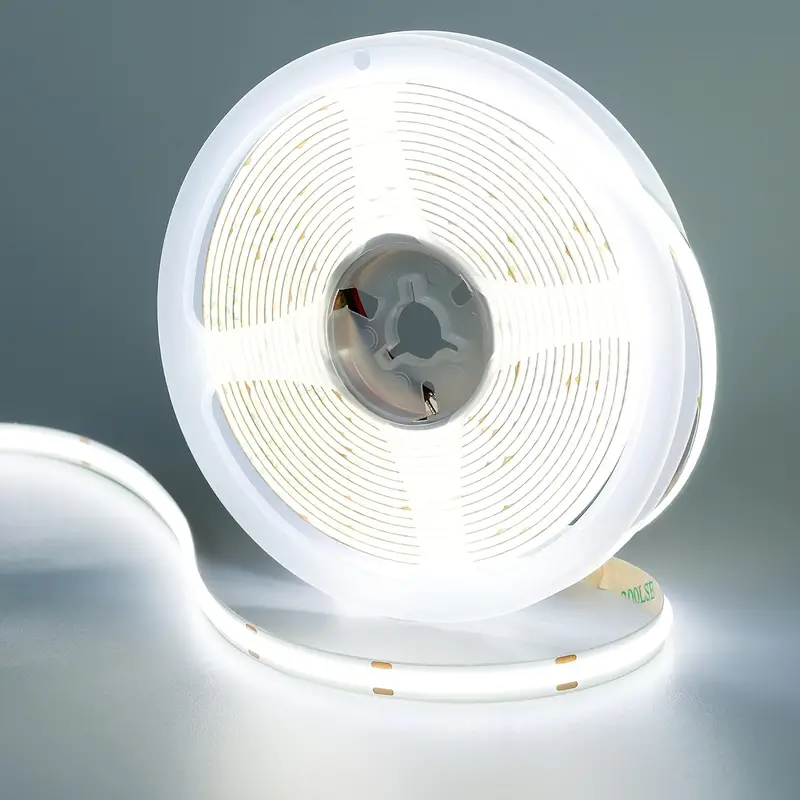
COB LED lights (short for “chip on board”) are LED lights where multiple chips are mounted together on a single board. They emit a powerful, even light that’s perfect for kitchens, where brightness and energy efficiency are key. COB LEDs have several benefits:
- Energy efficiency: They’re significantly more energy-efficient than traditional bulbs.
- Compact design: They fit into smaller spaces.
- Bright, even illumination: Perfect for task lighting.
Where LED COB Lights Can Make the Greatest Impact
Let’s get into the nitty-gritty of where you can use these powerhouse lights in your kitchen for maximum effect and practicality.
1. Under-Cabinet Lighting: For Precision and Practicality
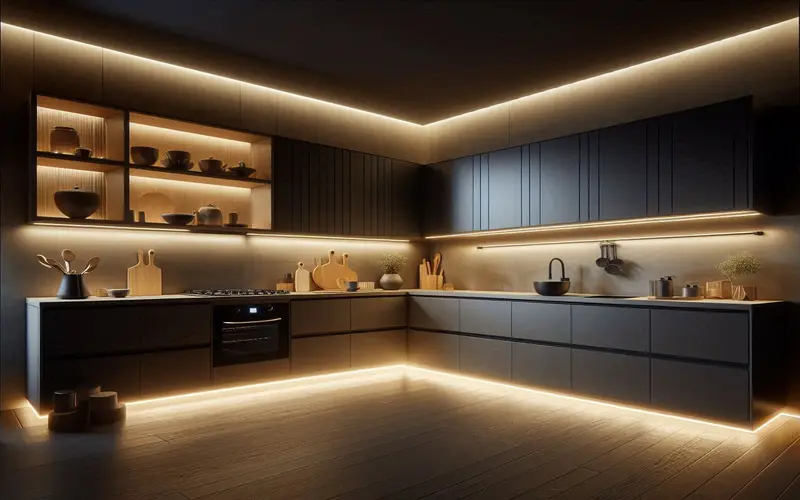
Under-cabinet lighting is task lighting at its finest. When placed under wall-mounted cabinets, LED COB strips cast a bright, shadow-free light onto countertops—just what you need for tasks like chopping veggies or reading recipes.
How to Install Under-Cabinet COB LED Lighting
Mount COB LED light strips along the underside of your cabinets, focusing especially on sections above the work zones. The lights should be positioned as close to the wall as possible to prevent glare and provide even light.
2. Recessed Ceiling Lighting: An Ambient Lighting Must-Have
Recessed lights are a popular choice for kitchen ceilings because they give an all-over glow without taking up space. With COB LED downlights, you get powerful, even lighting that keeps your kitchen bright and inviting without harsh shadows.
Where to Place Recessed COB LED Lights
Distribute them evenly across the ceiling, with a focus on areas that get the most traffic, like near the sink, stove, and island. A good rule of thumb is to install a recessed light every 4-6 feet.
3. Pendant Lights Over The Island: Style Meets Functionality
Pendant lights add a decorative touch while doubling as task lighting over kitchen islands. Since COB LEDs come in compact designs, you can even find them in pendant-style fixtures, giving you a stylish light that’s also super bright and efficient.
Choosing Pendant Lighting for Your Kitchen Island
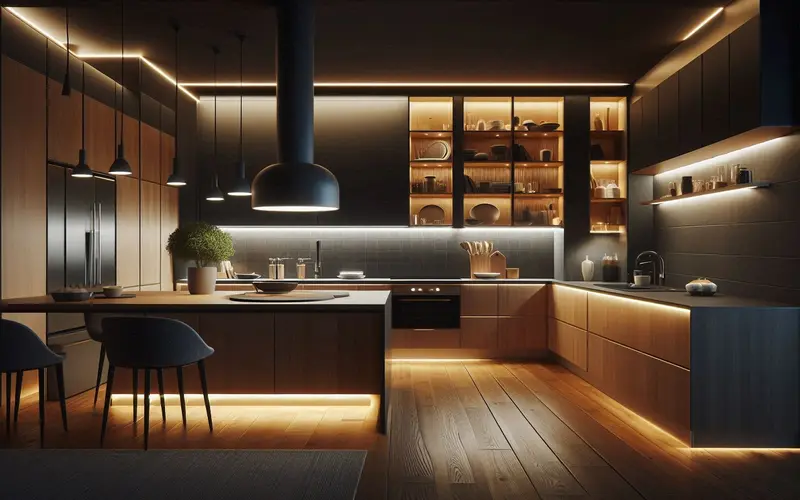
Choose a pendant with a COB LED for maximum brightness, and hang it about 30-36 inches above the island surface for the best light coverage. A trio of pendants in a row usually provides the best illumination and symmetry for most kitchen islands.
4. Accent Lighting in Cabinets: Show Off Your Style
Glass-front cabinets are perfect for showing off your favourite dishes, and a little lighting can add even more elegance. COB LED strips work beautifully inside cabinets because they’re compact, bright, and won’t emit much heat—so your dishes stay cool while looking great.
How to Set Up Cabinet Accent Lighting with LED COB Strips
Install LED COB strips along the top or side edges of the inside of each cabinet. For best results, use cool white or warm white light, depending on the overall feel of your kitchen. The even glow of COB lights makes every item in the cabinet shine.
5. Toe-Kick Lighting: The Underrated Hero of Kitchen Design
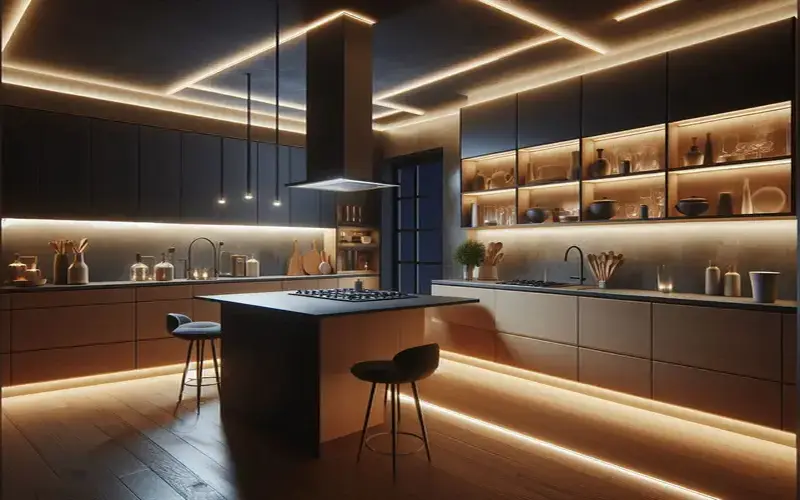
Toe-kick lighting involves adding a strip of lights under the base of your cabinets, casting a soft glow along the floor. It’s a unique way to add dimension to your kitchen, making the floor space seem larger and more inviting. Plus, it can also act as a gentle night light.
Installing LED COB Lights as Toe-Kick Lighting
Position LED COB strips along the toe-kick area (the recessed area at the base of cabinets). Choose a dimmable option for flexibility, so it’s bright when you need it and soft for a cosy, night-time glow.
Planning the Perfect Lighting Layout
Now that you know where each type of lighting goes, let’s talk layout. Here are a few tips to keep in mind when arranging your lights:
- Layer the light: Combine ambient, task, and accent lighting for a well-lit, multifunctional space.
- Use dimmers: Installing dimmer switches gives you control over the brightness, making it easy to switch from a cosy dinner vibe to a well-lit cooking space.
- Focus on high-use areas: Prioritize lighting in spaces where you do the most work, like countertops, the sink, and the island.
Choosing the Right LED COB Color Temperature in Your Kitchen Lighting Design
The colour temperature of your LED lights makes a big difference in your kitchen’s ambience. Here’s a quick guide:
- Warm White (2700-3000K): Creates a cosy, inviting glow—great for ambient lighting and accent lighting inside cabinets.
- Cool White (3500-4100K): Crisp and bright without being too harsh, ideal for task lighting under cabinets.
- Daylight (5000-6500K): Extremely bright and clear—useful for areas where you need maximum visibility, like over the stove.
Your Kitchen Lighting Makeover Awaits
Designing a lighting layout for your kitchen doesn’t have to be intimidating. By using a combination of ambient, task, and accent lighting—and knowing how and where to use powerful LED COB lights—you’ll have a kitchen that’s functional, beautiful, and even energy-efficient. Whether you’re chopping, entertaining, or sneaking into the fridge at midnight, your kitchen will be well-lit and ready.
So go ahead, give your kitchen the lighting it deserves and let the compliments roll in!