
Discover the best roof pitch for different climates, including pitched and flat roofs. Learn about optimal rainwater and snow disposal for lasting performance.
Table of Contents
What is Roof Pitch?
Roof pitch refers to the angle or slope of a roof, expressed as the ratio of its vertical rise to its horizontal span. This angle plays a critical role in determining how well a roof sheds rainwater, handles snow accumulation, and withstands environmental conditions. Selecting the appropriate roof pitch for your climate can prevent long-term damage and maximize efficiency.
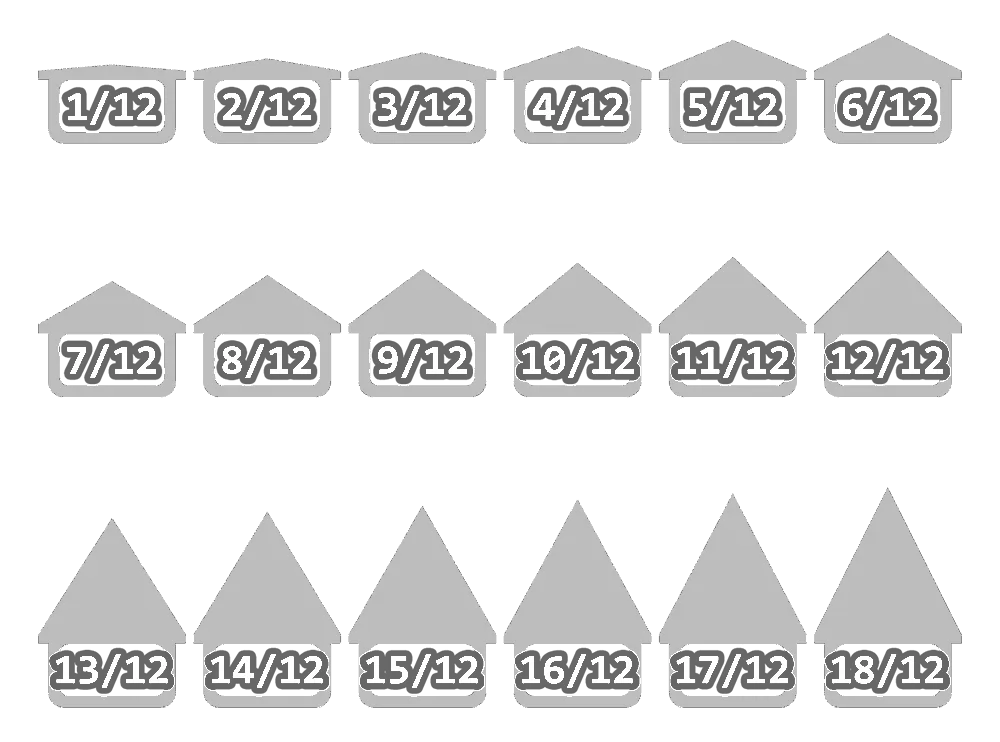
Roof Pitch for Different Climates
1. Cold Climates: Optimal Snow Management
In snowy regions, the roof pitch should be steep, typically 40° to 60°, ( 11/12 to 13/12 in the image above ) to prevent snow from accumulating and causing structural strain. Steep pitches allow snow to slide off naturally, reducing the risk of ice dams.
- Best Roof Type: Pitched roofs with metal or asphalt shingles for durability.
- Snow Disposal: Install snow guards or snow stops to control sliding snow, protecting people and property below.
- Flat Roof Considerations: Flat roofs in cold climates require extra reinforcement and drainage systems, as they are prone to snow buildup.
2. Rainy Climates: Effective Water Shedding
For regions with heavy rainfall, a roof pitch of 30° to 45° is recommended. This slope ensures water runs off efficiently without pooling, which could lead to leaks or structural damage.
- Best Roof Type: Pitched roofs with waterproofing membranes or tile roofing.
- Water Disposal: Install gutters and downspouts to channel water away from the foundation. Consider adding a rainwater harvesting system to make use of excess runoff.
- Flat Roof Considerations: Use advanced drainage solutions like interior drains, scuppers, or tapered insulation to prevent pooling.
3. Hot and Arid Climates: Minimizing Heat Absorption
In dry, sunny areas, a lower pitch of 5° to 25° is sufficient. This flatter design reduces heat absorption, especially when paired with reflective roofing materials.
- Best Roof Type: Flat or low-slope roofs with reflective coatings or cool roofing systems.
- Rainwater Disposal: While rain is infrequent, ensure flat roofs have adequate drainage to handle sudden downpours.

4. Windy Climates: Stability Against Strong Winds
In areas prone to high winds or hurricanes, a moderate pitch of 30° to 40° is ideal. Steep roofs can catch the wind like a sail, while flat roofs may struggle to handle wind uplift.
- Best Roof Type: Gable or hip roofs with reinforced bracing systems.
- Rainwater and Snow Disposal: Include robust guttering systems to handle debris-laden runoff.
Roof Pitch for Flat Roofs
Flat roofs are commonly used in commercial buildings and modern residential designs. Despite their name, flat roofs have a slight slope (around 1° to 5°) for drainage.
- Materials: EPDM, TPO, or bitumen membranes ensure water resistance.
- Drainage Systems: Use scuppers, downspouts, or internal drains for efficient water removal.
- Snow Management: In cold regions, flat roofs must be designed with reinforced structures to support snow loads.
How to Calculate Roof Pitch
To determine roof pitch:
- Measure the vertical rise (height) over a 12-inch horizontal run.
- Express the pitch as a ratio (e.g., 6:12 means a 6-inch rise over 12 inches).
Step-by-Step Guide for Rainwater and Snow Disposal
- Install Gutters and Downspouts: Position gutters at the edge of pitched roofs to channel water to downspouts.
- Set Up Drainage Systems for Flat Roofs: Use scuppers or interior drains to handle runoff efficiently.
- Add Snow Guards: Prevent heavy snow from sliding off pitched roofs uncontrollably.
- Maintain Regularly: Clean gutters and inspect drainage systems to avoid clogs and ice blockages.
Regional Considerations for Roof Pitch
- UK: With moderate rainfall and occasional snow, a pitch of 30° to 45° is common, using materials like slate or clay tiles.
- US (Northeast): Snow-heavy regions require steep roofs for effective snow disposal.
- Tropical Areas: Low pitches with reflective materials combat heat and handle heavy rains efficiently.
High-Value Organic Keywords
- Roof pitch for snowy regions
- Roof pitch for rainy climates
- Best roof materials for flat roofs
- Rainwater drainage systems for roofs
Conclusion
Choosing the right roof pitch is crucial for climate adaptability and long-term performance. From steep slopes to combat snow to low pitches for heat reduction, understanding your regional needs is the key to effective roof design. Always consult with professionals to ensure your roof meets both functional and aesthetic goals.