
How to cure styrocrete
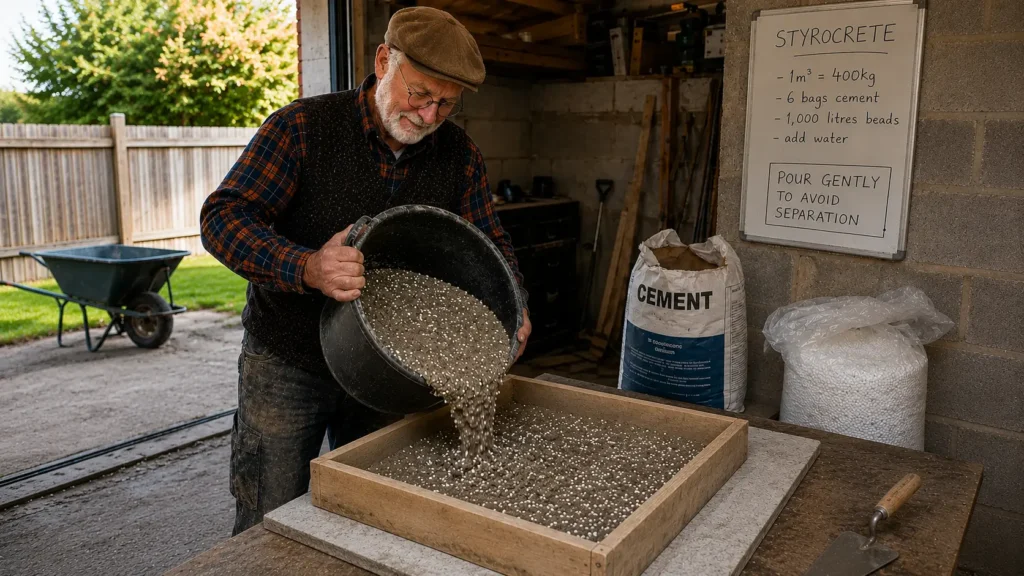
Table of Contents
You’ve mixed your Styrocrete and it looks about right. Now comes the part that can make the difference between a solid lightweight slab and a crumbly mess.
Fortunately, Styrocrete is quite forgiving if you understand a few simple rules.
This article covers placing, levelling, finishing and curing.
Don’t Treat It Like Normal Concrete
The biggest mistake beginners make is assuming Styrocrete behaves like ordinary concrete.
It doesn’t.
The polystyrene beads reduce the weight dramatically, but they also make the mixture much less dense.
That means:
- it doesn’t flow as well
- it shouldn’t be heavily vibrated
- excessive trowelling can pull cement paste to the surface
Gentle handling produces better results.
Preparing the Area
Before mixing anything:
- dampen absorbent surfaces
- ensure shuttering is secure
- prepare all tools first
- calculate the volume required
Styrocrete is easier to place continuously than in several batches.
Pouring
Pour gently.
Avoid dropping large quantities from height because this can encourage separation.
Spread the mix with a shovel or rake.
Don’t overwork it.
Levelling
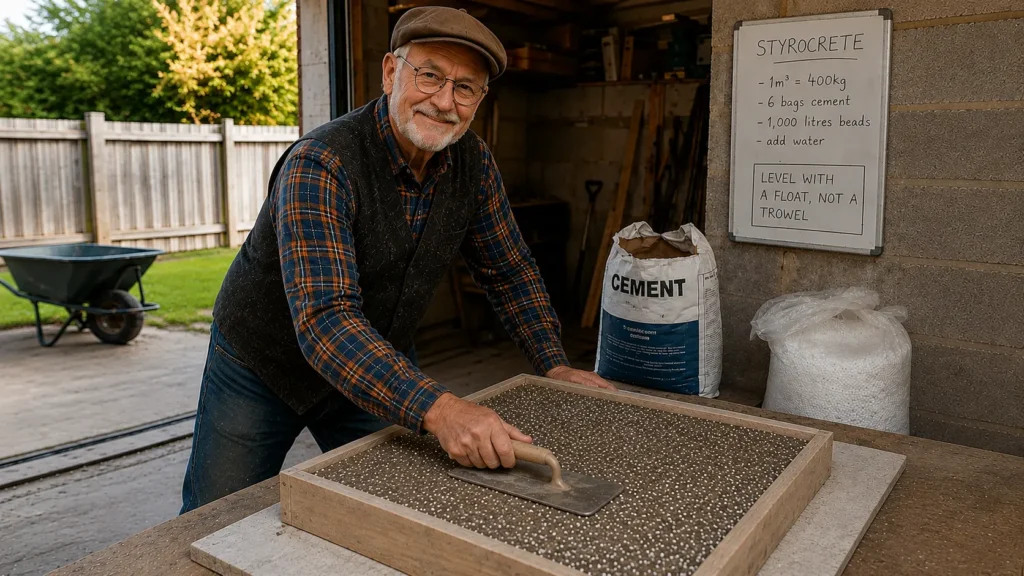
A straight piece of timber makes an excellent screed.
Draw it slowly across the surface.
Unlike ordinary concrete, don’t expect a perfectly smooth finish immediately.
Small bead marks are completely normal.
Should You Vibrate It?
Generally no.
Heavy vibration encourages:
- segregation
- floating beads
- settlement of cement paste
A light tap on the shuttering is normally sufficient to remove trapped air.
Finishing the Surface
If the Styrocrete is only acting as insulation beneath another floor, the finish isn’t particularly important.
If it’s the final surface:
- wait until initial stiffening
- use a float rather than a steel trowel
- don’t polish it excessively
Curing
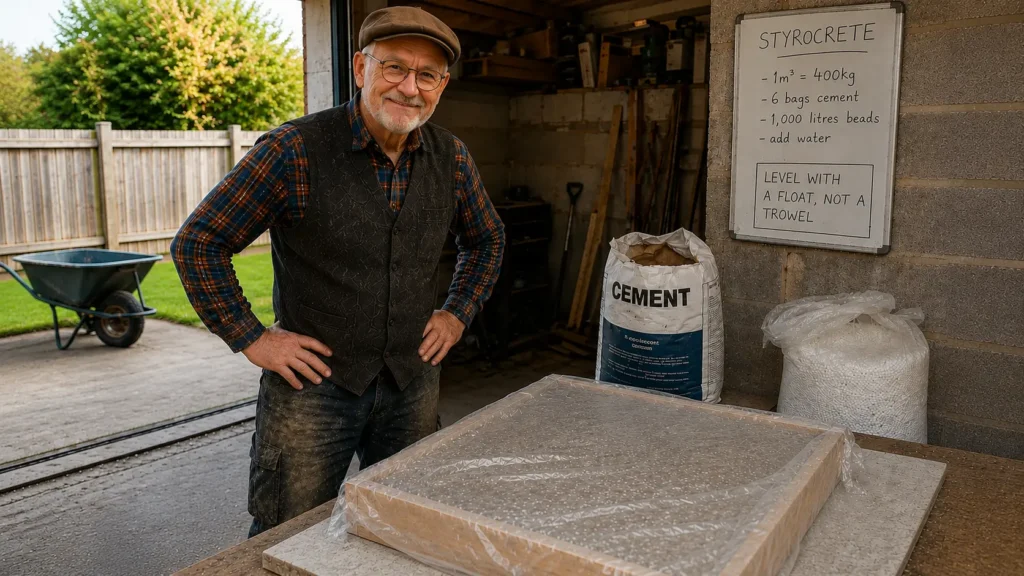
Like any cement product, curing matters.
Protect it from:
- direct sun
- drying winds
- heavy rain
- freezing temperatures
Keeping moisture in during the first few days improves strength.
How Strong Is It After One Day?
It may feel firm surprisingly quickly.
Don’t assume it has reached full strength.
Leave heavy loads until curing is well advanced.
Patience produces better results.
Common Mistakes
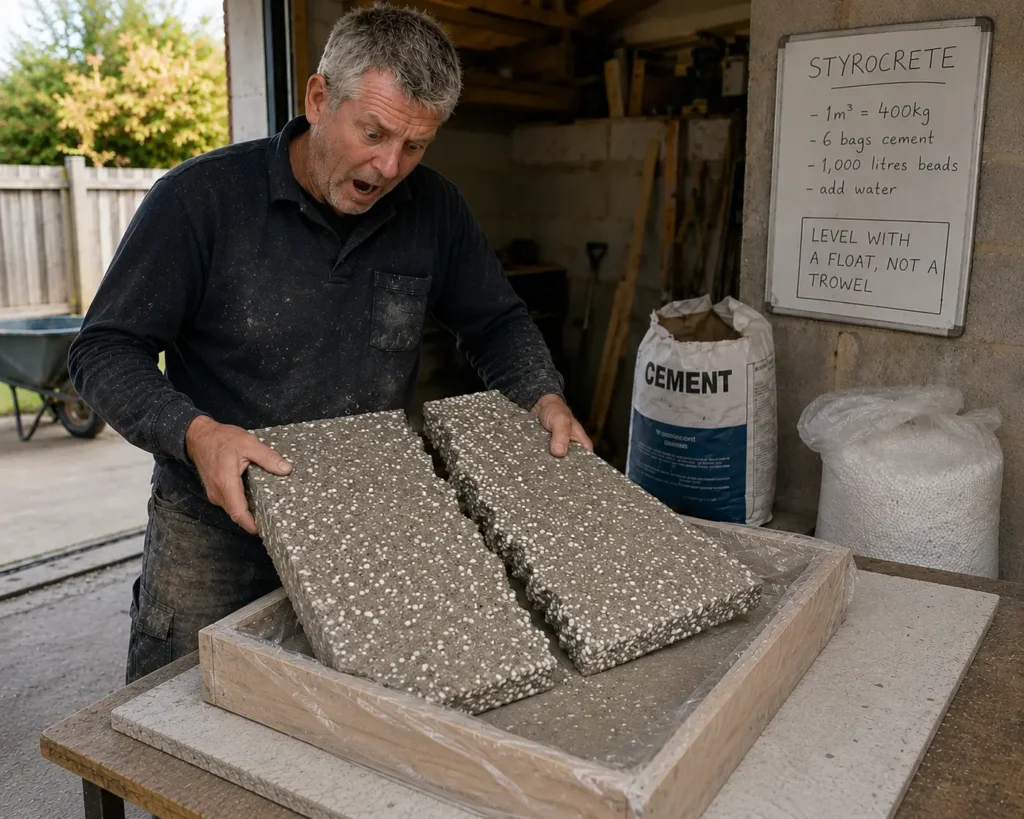
✓ Mix too wet.
✓ Over-mix until beads break.
✓ Vibrate like normal concrete.
✓ Try to polish it like a garage floor.
✓ Walk on it too early.
Final Thoughts
Styrocrete isn’t difficult.
It simply behaves differently from conventional concrete.
Once you understand that, it’s actually one of the easiest lightweight building materials to work with.