
Can I Make Styrocrete Using Packaging Polystyrene?
Yes, you can make styrocrete … and it’s probably much easier than you think.
Table of Contents
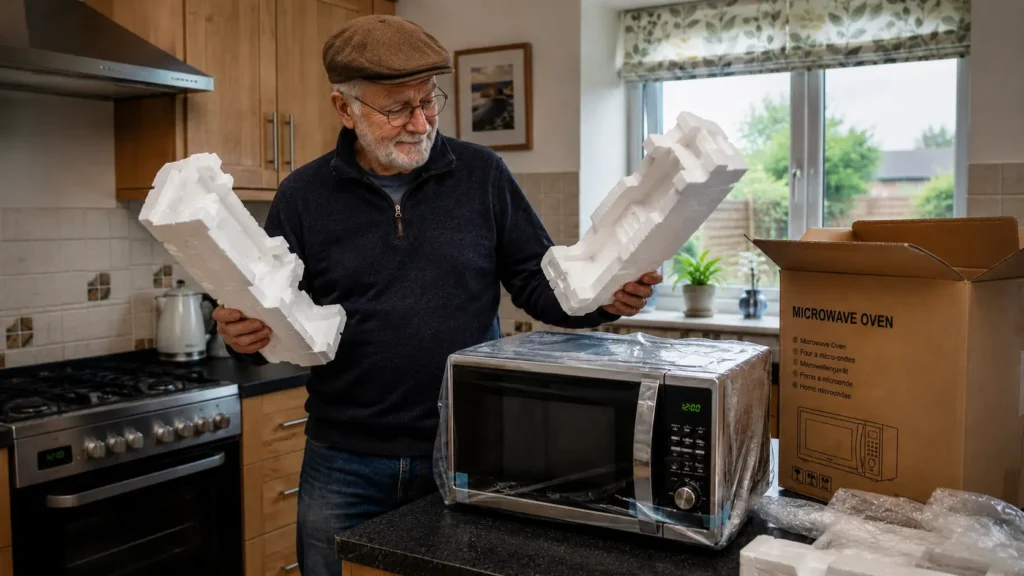
If you’re anything like me, you’ve probably looked at the white polystyrene packaging protecting a new television or microwave and thought:
“Surely somebody must have a use for all this.”
Well…
they do.
One of those uses is to make Styrocrete.
But before you rush off to save every bit of packaging you can find, there are a few things you should know.
First Things First…
No.
You do not have to spend the next fortnight making millions of tiny little balls.
That thought alone would put most people off before they even started.
Fortunately, Styrocrete is much more forgiving than that.
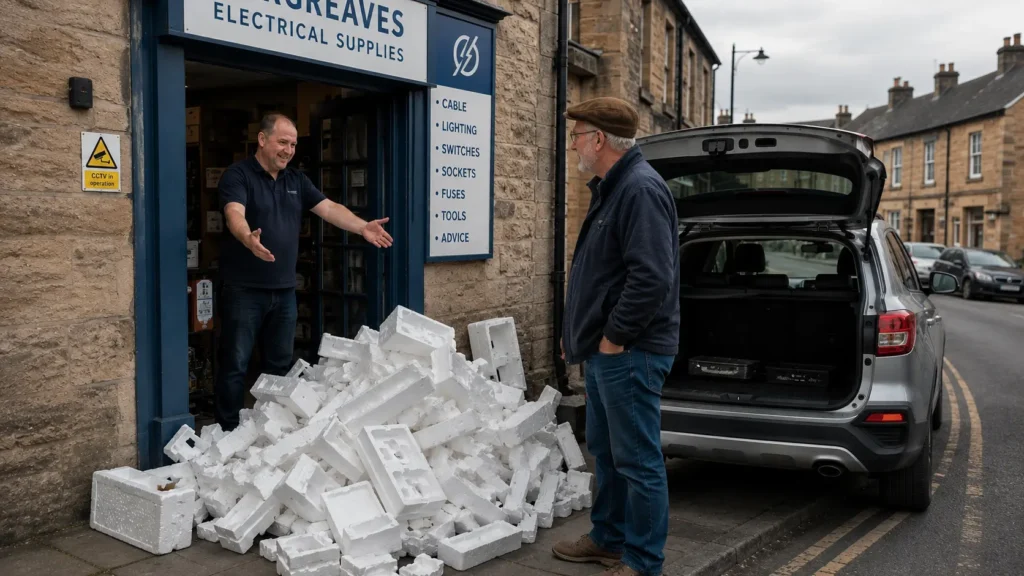
Don’t be too ambitious on your first collection trip.
Polystyrene packaging is surprisingly bulky because of all the empty space between the pieces. Your SUV may look enormous until you start loading it. A few large TV and washing machine inserts will fill the boot much faster than you expect. Collect enough for your next project, not the next six.
Do They Have To Be Tiny Beads?
Not necessarily.
Professional manufacturers use perfectly round expanded polystyrene beads because they’re easy to mix and produce consistent results.
As DIY builders…
…we don’t need laboratory perfection.
Small irregular pieces work surprisingly well.
The cement simply coats whatever pieces you give it.
So How Small Is “Small”?
Here’s a simple guide.
Imagine a garden pea.
Now imagine cutting it into four.
That’s already about the largest size I’d want.
Anything between about 5 mm and 15 mm works quite well for many DIY projects.
The smaller the pieces, the smoother the finished Styrocrete becomes.
But don’t lose sleep over making everything identical.
Nature isn’t identical.
Neither is DIY.
Can I Just Break It Up By Hand?
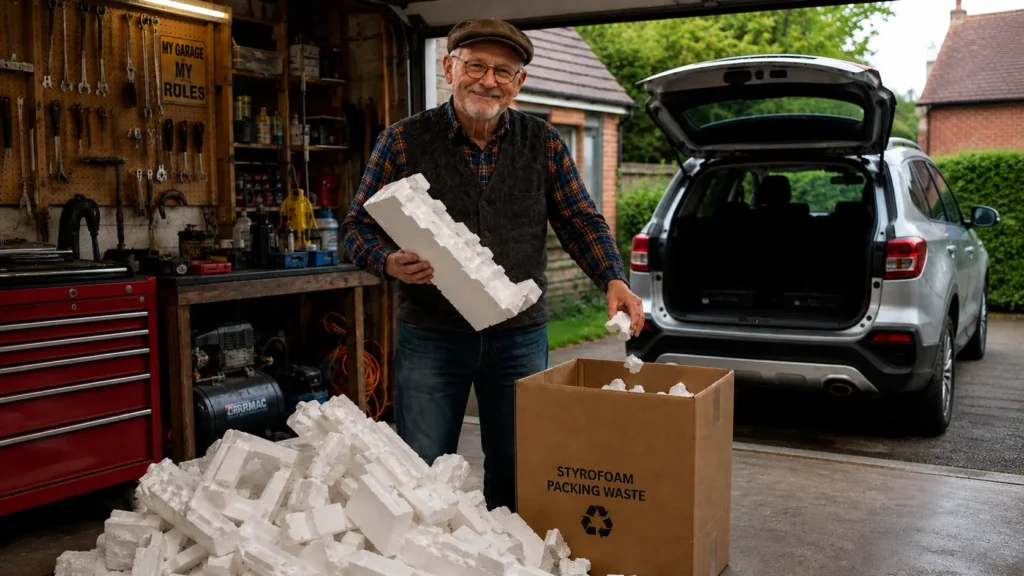
You can.
In fact, for small quantities that’s often all you need to do.
Many packaging inserts already snap into useful pieces with very little effort.
Sit in front of the television one evening…
snap…
snap…
snap…
Before the programme has finished you’ll have enough for a decent-sized test batch.
Is There A Faster Way?
Yes. But a word of caution. Styrene becomes statically charged. No, you won’t feel anything at all, but it will stick to anything at all, even you. Your other half will not be amused.
Several.
One of my favourites is wonderfully low-tech.
Place the polystyrene inside a strong plastic sack.
Now gently crush it.
Not with a sledgehammer!
Simply tread on it.
Roll it around.
Squeeze it.
The pieces gradually become smaller without disappearing all over the workshop.
What About A Garden Shredder?
People often ask this.
No, don’t.
Personally…
I’d be cautious.
Some garden shredders cope reasonably well.
Others simply throw the pieces back out again.
And static electricity means the bits have an amazing ability to stick to absolutely everything.
Including you.
What About A Kitchen Blender?
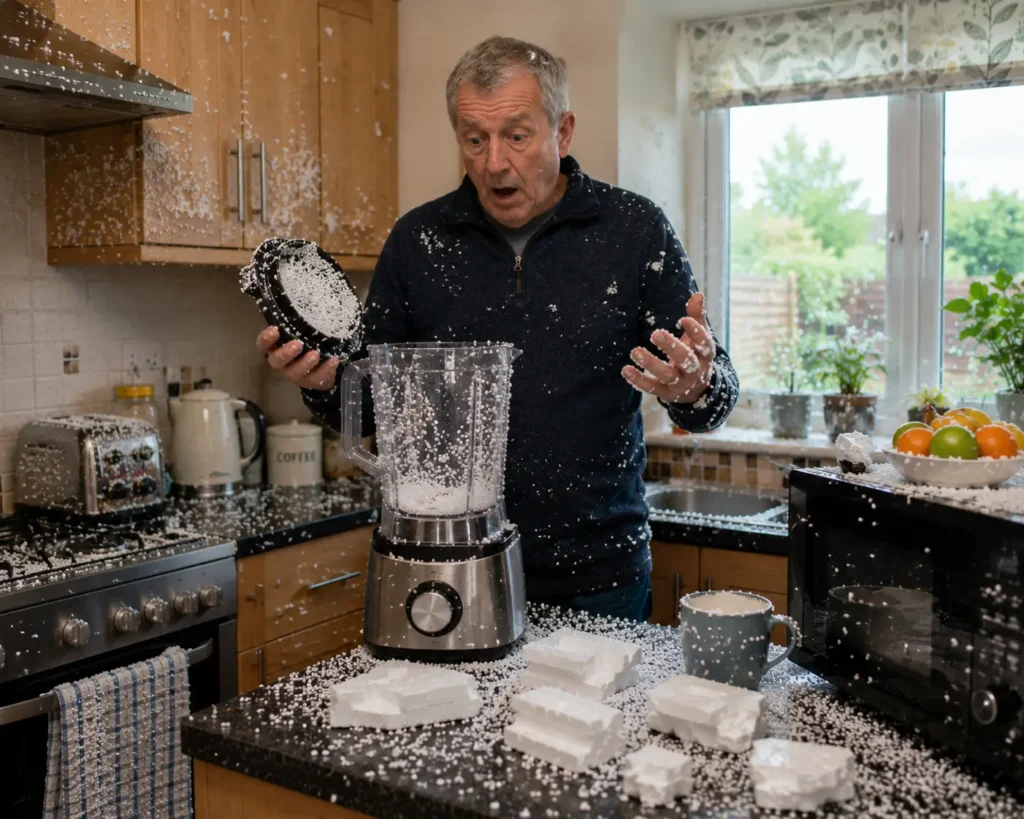
Please don’t.
Apart from the fact your other half might have something to say about it…
the static electricity makes cleaning a nightmare. You will never want to make styrocrete again!
Besides…
there are much easier methods.
A Dust Mask Isn’t A Bad Idea
Breaking up polystyrene doesn’t usually create dangerous dust like cutting timber or concrete.
But tiny fragments can float around in the air.
A simple dust mask and safety glasses make the job much more comfortable.
Don’t Worry About Perfection
Here’s something beginners often don’t realise.
The cement is doing the clever bit.
Its job is to glue thousands of little pieces together.
Whether one piece is 6 mm and another is 10 mm really isn’t the end of the world.
Consistency helps.
Perfection isn’t necessary.
Better Still…
Ask Around
If you need a large quantity…
don’t start saving takeaway boxes.
Go somewhere that throws away packaging every day.
For example:
- furniture shops
- electrical retailers
- kitchen suppliers
- builders’ merchants
Many are only too pleased for somebody to take it away.
One Important Exception
Not all white foam is the same.
The hard, crunchy expanded polystyrene used for packaging is ideal.
The soft flexible foam used in cushions…
isn’t. You can’t make styrocrete with it.
If you can squash it flat between your fingers and it springs back like a sponge…
it’s the wrong material.
My Advice?
Don’t spend weeks making beads.
Make enough for one bucket.
Mix it.
See how it behaves.
If you’re happy with the result…
then it’s worth making more.
If not…
you’ve only invested an evening, not a month.
The Bottom Line
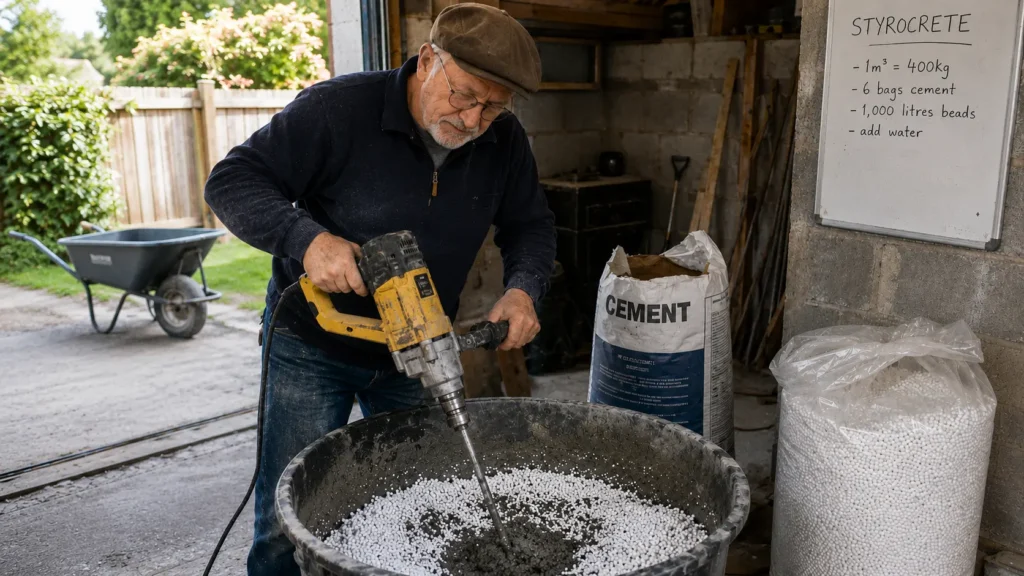
One of the biggest myths about Styrocrete is that you need expensive materials prepared to factory standards.
You don’t.
The important thing isn’t producing perfect beads.
It’s producing usable insulation.
Don’t let the fear of making it “perfect” stop you making it at all.
Tom’s Workshop Tip
Here’s a trick I discovered by accident. Don’t try to reduce every piece to the same size. A mixture of small and slightly larger pieces often packs together very well because the smaller bits naturally fill some of the gaps between the larger ones. As long as you’re in roughly the 5–15 mm range, you’re making life easy for yourself without turning bead preparation into a full-time job.
One tiny technical point, because accuracy matters. When you say Styrocrete, people often picture the tiny spherical beads sold for beanbags or insulation. In practice, clean, chopped expanded polystyrene (EPS) from packaging can work very well for many DIY insulating and lightweight-fill applications. The finished material may not be as uniform or as predictable as mixes made with commercial graded EPS beads, but for a workshop floor, shed, garden room or similar project, many DIYers have had perfectly satisfactory results with recycled packaging.