
Let’s face it—“filling loop valve” sounds like something out of a sci-fi manual. But, in reality, it’s a much simpler beast. If your boiler’s feeling low on pressure, the filling loop is your go-to gadget for topping it up with water. Intrigued? Good! Let’s dive into the world of filling loops and their valves, and discover how to keep your boiler running smoother than a barista’s latte foam.
Table of Contents
how to use a boiler filling loop, topping up boiler pressure, repressurising boiler tips
What Exactly Is a Filling Loop?
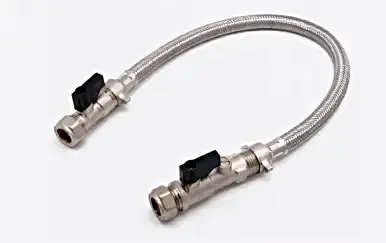
In non-technical speak, it’s a hose that temporarily connects your boiler to the mains water supply. Its mission? To boost your boiler’s water pressure and keep your radiators feeling all warm and fuzzy.
The valve, located at one or both ends of the loop, is like the gatekeeper. It ensures water flows where it should—and doesn’t flow back where it shouldn’t (more on that pesky backflow later).
purpose of filling loop valves, boiler maintenance tips
Meet the Two Types of Filling Loops
Let’s break it down:
- External Loops
Picture a braided hose with compression fittings at either end. These loops usually have two key players:- Stop Valve: The on/off switch that controls water flow.Double Check Valve: Think of it as the bouncer at the door, stopping water from backflowing into your mains supply.
- Internal Loops
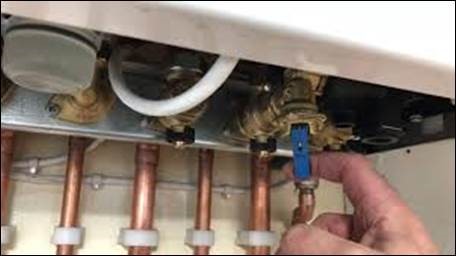
Found tucked away inside some boilers (like certain Viessmann models), internal loops are built-in and very simple to operate. They’re often connected directly to the mains, making the setup a bit more compact but no less efficient. - Mostly modern internal loops are VERY straightforward and consist of only a knob near the pressure gauge. Turning it anticlockwise allows water from the main supply straight into the heating circuit and when the gauge reads in the green, turn it clockwise to close it. It’s that simple.
types of boiler filling loops, internal vs external filling loop valves
How to Find Your Boiler’s Filling Loop
Your loop usually lurks around the underside of your boiler, mingling with the pipework. It might look like a regular hose or, in the case of internal loops, be sneakily hidden behind a hatch and may be a simple knob to turn (as mine is).
If it’s playing hard to get:
- Grab your boiler manual.
- Check the manufacturer’s website for diagrams.
- Or simply channel your inner detective and give the underside of your boiler a good look.
where to find boiler filling loop, locating filling loop on combi boilers
How to Use a Boiler Filling Loop (Without Turning Your Kitchen Into Niagara Falls)
Whether your loop is internal or external, the basic goal is the same: get water from the mains into your boiler to hit that sweet pressure range of 1–1.5 bar.
For External Loops:
- Turn Off the Boiler: Safety first—no one wants a hot water surprise!
- Connect the Loop: Attach the hose to the valves, ensuring a snug fit.
- Turn the Valve: Slowly open the valve(s) to let water flow into the boiler.
- Watch the Gauge: Keep an eye on the pressure gauge—stop when it hits the recommended range.
- Close the Valve & Remove the Loop: Tighten the valve, disconnect the hose, and give yourself a pat on the back.
For Internal Loops:
- Turn Off the Boiler and Mains Power: Safety check, tick!
- Insert the Key (if applicable): Slot it into the loop mechanism.
- Activate the System: This could involve turning knobs or levers—follow your manufacturer’s instructions to the letter.
- Monitor the Pressure: Watch the gauge like a hawk until it reaches the right level.
- Reverse the Steps: Turn everything back to its original state and you’re done!
how to use an external filling loop, how to repressurise a boiler, boiler filling loop safety tips
What If You Need a New Loop or Valve?
No need to panic! Replacement loops and valves are easily found at hardware stores or online retailers. Just make sure you know the exact type for your boiler.
Pro Tips:
- Call ahead to check stock at local stores.
- If you’re stuck, contact the manufacturer for advice.
where to buy filling loop valves, replacing boiler filling loop, finding the right filling loop
Common Questions Answered
Q: Can I leave my filling loop connected?
A: For external loops, the answer is a resounding no! It’s a backflow hazard. Disconnect it after use to avoid fines (and angry neighbors).
Q: What happens if my pressure keeps dropping?
A: It could signal a leak in your system. Look for leaks at radiators or wherever you can see a connection of any type. If you don’t see a leak, it could be a problem elsewhere. Time to call in the pros.
Q: How often should I use the filling loop?
A: Only when your pressure dips below the recommended range. Frequent top-ups might indicate a deeper issue.
boiler filling loop FAQs, preventing boiler backflow, signs of boiler leaks
Installing a New Loop
If your boiler didn’t come with an internal loop, you’ll need to fit an external one. This isn’t rocket science, but it’s not a freestyle event either. Follow these general steps:
- Inspect the valves to determine the correct ends for connection.
- Secure the loop to the mains and boiler using an adjustable spanner.
- Double-check everything is tight and aligned according to the manufacturer’s guidance.
And remember, the filling loop should only stay connected when in use—disconnect it once your boiler is topped up.
how to install a filling loop, boiler filling loop installation tips
Wrap-Up: Boiler Bliss Awaits
There you have it—a lighthearted, no-nonsense guide to filling loop valves. Whether you’re repressurising your boiler or swapping out a worn valve, you’ve got the know-how to tackle the task.
So, go forth, wield your radiator key with confidence, and enjoy a home as warm and inviting as your favorite cup of tea. And remember, if DIY leaves you scratching your head, there’s no shame in calling the pros—it’s what they’re here for!