
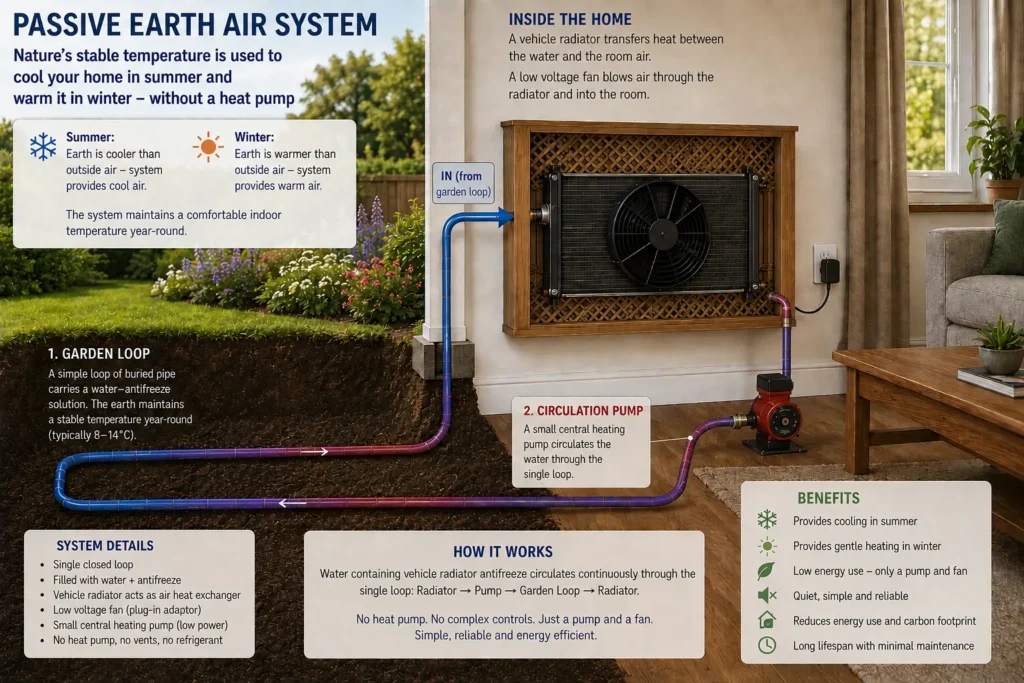
This geothermal system has the beauty of simplicity. Including the buried pipework, there are a total of 5 active components with a couple of other components for control. For thousands of years, man lived in caves. The beauty of caves is that in the summer they are cool but in the winter they feel warm. Far enough into a cave and the temperature is a steady 13C. Let’s just call it 13C so we have a reference to work to. It may never be exactly that but hey, we need a figure. This is due to the fact that the earth itself retains an ambient temperature all year round. This system has the beauty of simplicity. Including the buried pipework, there are a total of 5 active components with a couple of other components for control.
Table of Contents
Geothermal Groundwork
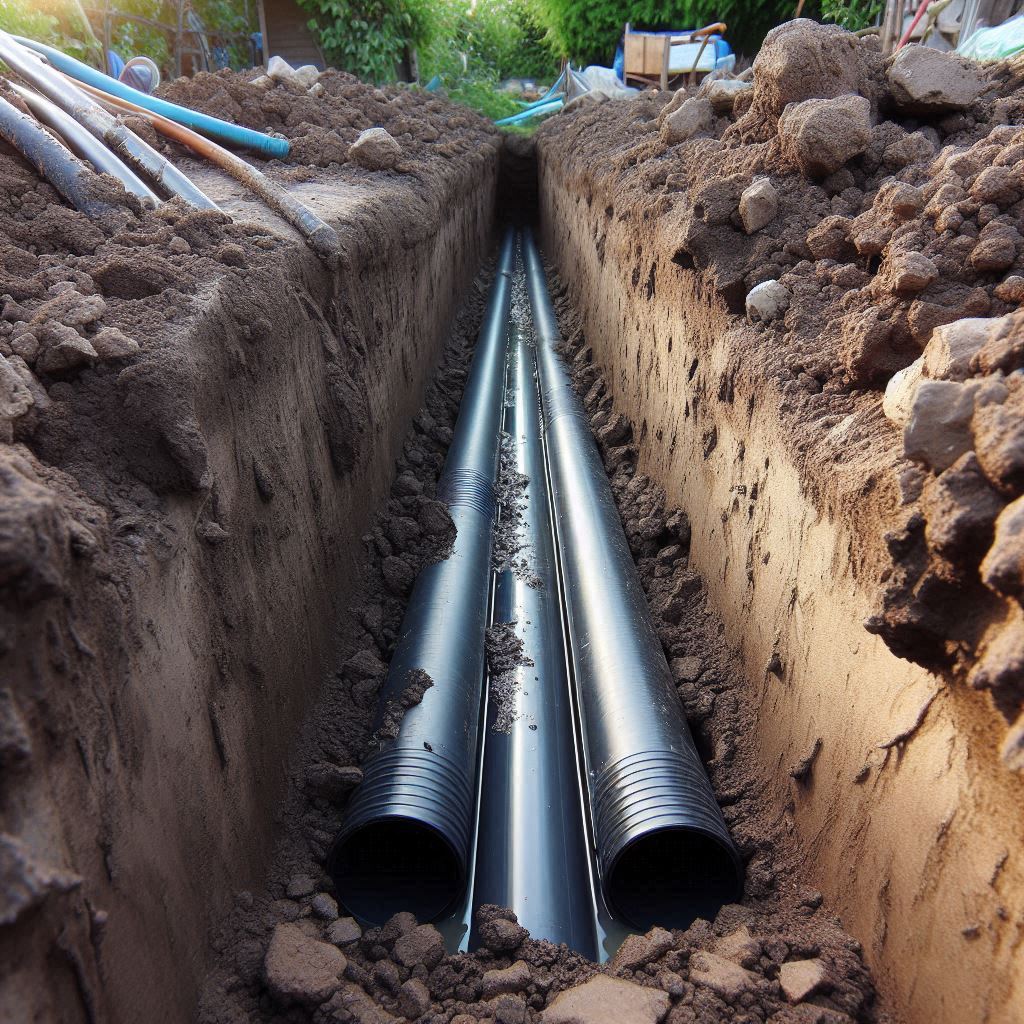
A channel about 1 meter wide and one to two meters deep is cut into the ground. The deeper this channel is, the more stable will be the underground temperature although for practical purposes, there is probably little point in cutting deeper than 3 meters. The cut needs to be made in the ground using as much of the available real estate as possible. The model for this project was my own garden and the total length of the channel was an oblong, approximately 15 x 10 meters giving a total length of around 50 meters. The pipework for this channel ran a total of 3 times around the circuit. Giving a total pipe length of about 150 meters.
Components For The Geothermal System.
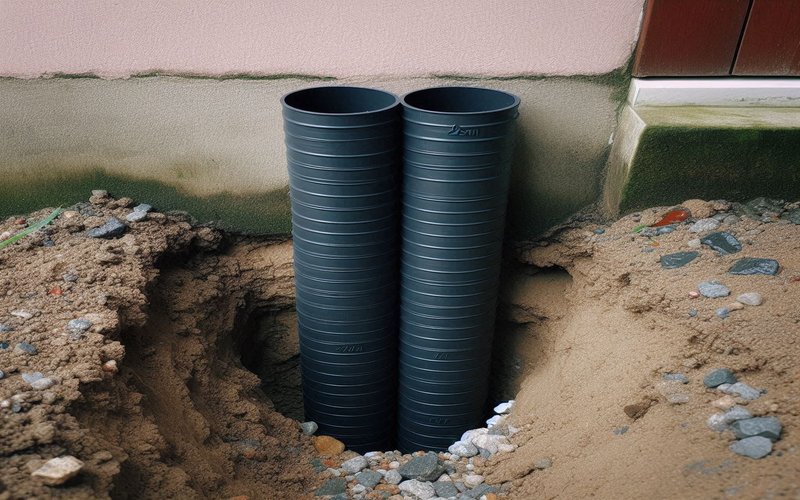
In practice, I found that a car radiator with an electric fan could be obtained for a few dollars from any auto junkyard. The pipework used was the standard garden irrigation black plastic tubing obtainable from any garden centre. Now it must be taken into account that the larger the diameter of the pipe in the ground, the greater its surface to soil ratio so a large diameter pipe will collect more calories. In this matter expense and difficulty must be taken into account.
It is quite possible to use a much larger diameter pipe and fit reducers on the ends to connect to the radiator. In the prototype, I decided to stick with the garden watering system plastic pipe although I knew that if this was a mistake, it would be very difficult to change it later. In practice, I was happy enough with the results, not to wish that I had used a larger diameter pipe. To an extent, the extra area gained by using large diameter pipe, can be offset simply by increasing the number of runs of the normal garden watering pipe, as this will of course, increase the amount of soil contact.
A Measure Of Frost Protection
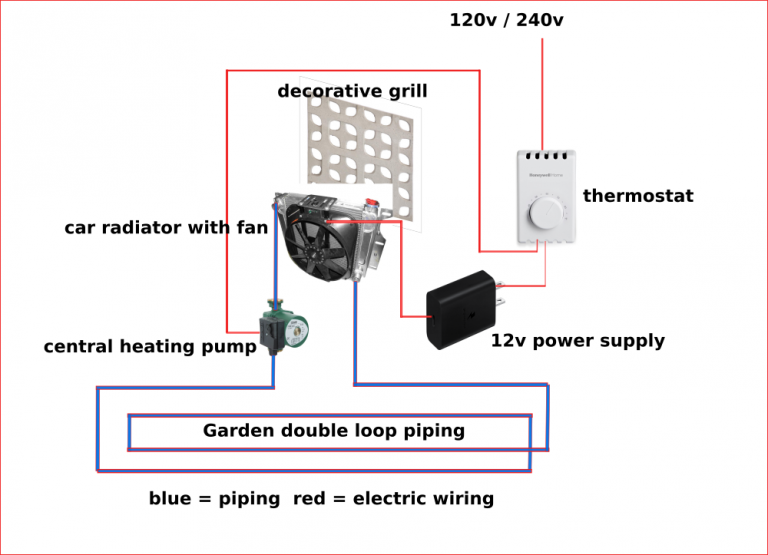
Rather than simply filling the system with water, a measure of frost protection can be given by adding the liquid for sale in auto spares shops which is used to wash the windshield in winter months. This is not a necessity as the water running through the system will be at a higher temperature than the air temperature anyway, but it’s belt and braces. The pump is a standard central heating circulation pump. A small 2amp 12volt power adapter was used to supply 12 volts to the radiator fan and a room thermostat was used to control the room temperature by switching the power to the 12volt adapter and the pump. The system must be used in conjunction with normal room heating in the winter, but it will greatly save on fuel bills by halving the usage of fuel by the normal heating system. In the summer, the cool air from the system is a welcome relief and far cheaper than running a standard air conditioning unit.
How does it work?
The operation is a constant loop system. The pipe is filled with water. The water is circulated through a car radiator by a small central heating pump. The water in the pipe collects the calories from the earth – 13C – and that temperature is delivered to the radiator. A fan is used to blow the cool air from the radiator, into the room. The water from the radiator again passes back into the pipework to collect the same 13C from the ground and the process is repeated ad infinitum.
Electrical Wiring Of The Geothermal System
The mains electricity supply is connected to the thermostat. The output of the thermostat supplies two things only. One is a 2 Amp power supply of the kind which plugs into a wall power socket and has a 12 volt cable coming out of it. It is used only to supply power to the radiator fan. The other mains output supplies the small central heating pump. This is the only electrical wiring necessary and the whole unit can be run from a solar panelfor complete freedom from the grid..
Geothermal Unit Thermostat
When the room temperature reaches the set level, the fan and the heating pump will be switched off. and the system is dormant. When used in conjunction with aircon or other heating, the thermostat picks up the room temperature, not only the geothermal system temperature and controls the geothermal system accordingly. If a thermostat is already in use for the room temperature from aircon or other heating/cooling, it can also control the geothermal unit, or the geothermal unit alone if the other systems are switched off.
In the summer, 13C blowing into the room is quite welcome when the outside temperatures are in the late 20s to early 30s. Even if the aircon is used, the additional cooling supplied by the geothermal system reduces the cost of the aircon.
What About Winter?
In winter, the system works exactly as it did in the summer. The difference is ambient. The geothermal system continues to pump its 13C into the room when outside temperatures are 0C. The normal heating system of the room has only to add the extra degrees on top of the 13C to bring the room temperature to a more comfortable level. This results in savings as the normal heating system no longer has to get the temperatures off the ground to reach that initial 13C