
Bubble wrap window insulation.
Table of Contents
Bubble wrap window insulation has been long used in greenhouses, workshops, off-grid cabins, and emergency housing, can significantly reduce heat loss, cut cold drafts, and improve indoor comfort — especially in homes with single-glazed or poorly sealed windows.
When cold weather arrives and heating bills start to climb, most people immediately think of expensive solutions: new windows, double glazing, or heavy thermal curtains. What very few realise is that one of the most effective bubble wrap window insulation methods costs almost nothing and is often already in the house.
Used correctly, it is far more than a gimmick.
Why Windows Lose So Much Heat
Windows are one of the weakest points in any building’s insulation. In older properties, they can account for 25–40% of total heat loss, particularly when:
- Glass is single-pane
- Frames are wooden or metal
- Seals are worn or uneven
- There is no secondary glazing
Glass conducts heat easily. In winter, cold external air cools the glass surface, pulling warmth from the room through conduction and radiation.
Bubble wrap tackles this problem in a surprisingly effective way.

How Bubble Wrap Window Insulation Works
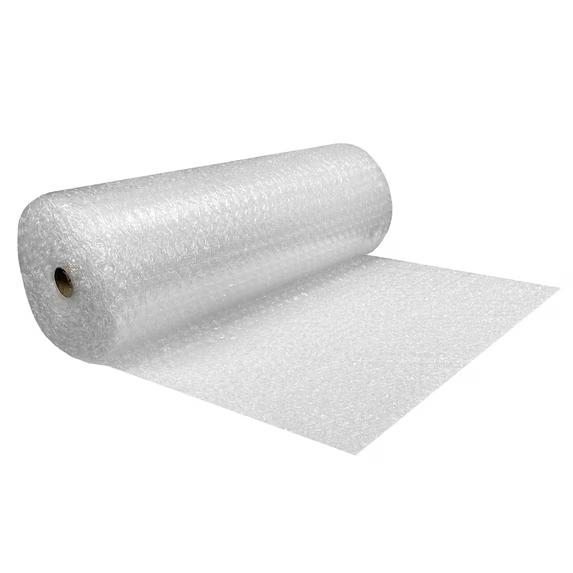
Bubble wrap insulates because it traps still air, which is one of the best natural insulators available.
Each bubble forms a sealed air pocket that:
- Slows heat transfer through conduction
- Prevents air movement (convection)
- Reduces radiant heat loss from warm rooms
This is the same principle used in double glazing — just without the high cost.
Important: The insulation comes from the trapped air, not the plastic itself.
Bubble Wrap vs Plastic Sheet (Polythene)
Many people ask whether plain plastic sheet works just as well. While plastic sheeting has benefits, it is not equivalent to bubble wrap.
Bubble Wrap Window Insulation
Advantages
- Genuine insulation from trapped air
- Warms the inner glass surface
- Easy to fit and remove
- Reusable for multiple winters
Disadvantages
- Slight reduction in light
- Temporary appearance
Plain Polythene Sheet
Advantages
- Excellent draft blocker
- Very cheap
- Good vapour control when sealed
Disadvantages
- Minimal insulation value
- Relies entirely on an air gap
- Can sag or tear in cold conditions
Best practice:
Bubble wrap works best directly on the glass. Polythene works best when used as sealed secondary glazing across the window frame.
Bubble Size and Insulation Performance
Not all bubble wrap performs the same. Bubble size matters.
Small Bubbles (≈10 mm)
- Better light transmission
- More flexible
- Slightly lower insulation
Medium Bubbles (≈20–25 mm)
- Best balance of insulation and usability
- Ideal for most homes
Large Bubbles (≈30 mm+)
- Highest insulation value
- Reduced light
- Best for workshops, garages, or unused rooms
Relative Insulation Comparison
| Covering Type | Relative Insulation |
|---|---|
| Bare glass | 1.0 |
| Polythene sheet | 1.2 |
| Small bubble wrap | 1.5 |
| Medium bubble wrap | 1.8 |
| Large bubble wrap | 2.1 |
(Illustrative real-world comparison, not laboratory R-values)
The Correct Way to Fit Bubble Wrap Window Insulation
Incorrect fitting is the main reason people think bubble wrap “doesn’t work”.
Which Side Goes Against the Glass?
Always place the flat side against the glass, bubbles facing inward.
This:
- Improves adhesion
- Reduces radiant heat loss
- Minimises moisture issues
The Best Fitting Method (No Tape)
- Clean the glass thoroughly
- Lightly spray with clean water
- Press the bubble wrap flat-side to the glass
- Smooth gently from the centre outward
The water creates temporary adhesion through surface tension — no damage, no residue.
Condensation: What Really Happens
Bubble wrap does not cause condensation. Condensation happens when warm, moist air meets a cold surface.
In fact, bubble wrap often reduces condensation by warming the inner surface of the glass.
To Avoid Moisture Problems:
- Fit only to dry glass
- Ventilate rooms daily
- Do not block trickle vents
- Remove and dry periodically if needed
Bubble wrap is not vapour-permeable, so moisture must not be trapped during installation.
Does Bubble Wrap Increase Mould Risk?
No — if installed correctly.
Mould problems occur only when:
- Moisture is trapped behind the wrap
- Rooms are never ventilated
- Window frames are already damp or damaged
A quick weekly check is sufficient in most climates.
Light Levels and Privacy
Bubble wrap diffuses light rather than blocking it completely.
- Rooms remain bright
- Privacy is improved
- Ideal for bathrooms, stairwells, and bedrooms
Small-bubble wrap offers the best compromise between light and insulation.
Removal, Reuse, and Storage
Bubble wrap can last several seasons if handled carefully.
Tips:
- Peel gently from one corner
- Dry before storage
- Store loosely rolled, not folded
Avoid sharp creases — they rupture the air cells.
When Bubble Wrap Window Insulation Is Not Suitable
Bubble wrap is not ideal for:
- Modern double or triple glazing
- Windows required as emergency exits
- Very humid spaces without ventilation
Final Thoughts
Bubble wrap window insulation is one of the most underrated cold-weather solutions available. While it won’t replace proper glazing, it offers remarkable performance for the cost, especially in older homes, rentals, and off-grid buildings.
Used properly, it can:
- Reduce heat loss
- Lower heating costs
- Improve comfort
- Control condensation
- Extend the usability of poorly insulated spaces
Sometimes the simplest solutions really do work best.